
dahlias
aka Dahlia Flower
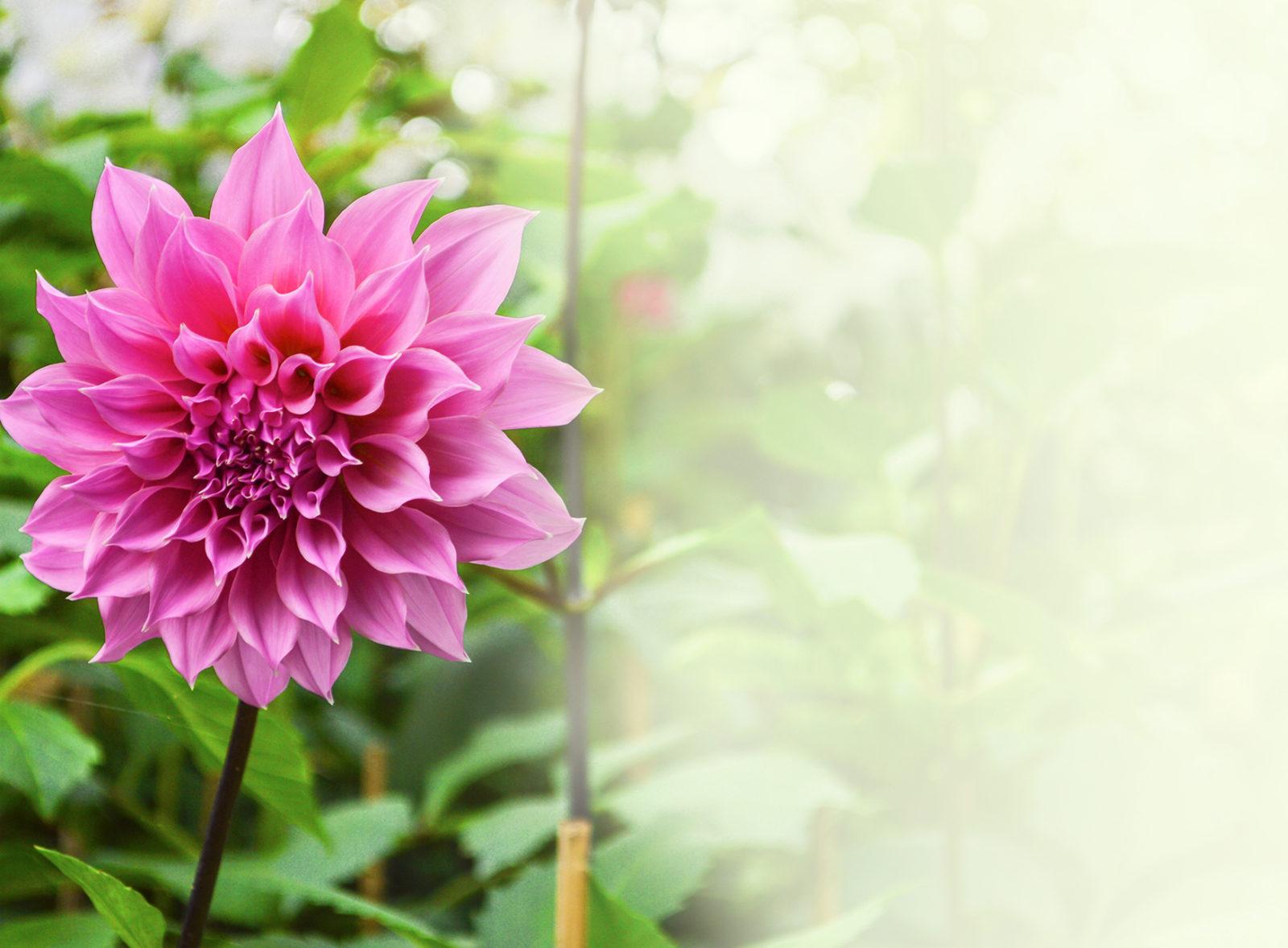
How can one flower be packed with so many petals!? Dahlias are geometry and pure beauty together as one. And with over 20,000 hybrid variations, there’s always something new and exciting for your garden.
variations
There are over 42 types of dahlias and innumerable hybrids.

light
full sun
Dahlias like to be sheltered from winds, but they positively love the sun. Find a spot with as much sun as possible. South and west facing locations are best.

water + feeding
not too thirsty
Young Dahlias don’t need much water and overwatering can even cause rot. When Dahlias are grown up, you only need to water if they get less than inch in seven days. Potted plants need more regular watering. Dahlias like regular feedings. To supercharge those incredible blossoms, pick a fertilizer that emphasizes Phosphorous over Nitrogen, like Miracle-Gro® Water Soluble Bloom Booster plant food. Too much nitrogen will overly promote greenery growth and reduce the number of flowers.

toxic
yes!
Toxic to pets if ingested. For humans, Dahlia roots have a phytotoxic (toxic when exposed to light) substance that can irritate the skin.

size
mostly medium
Most Dahlia varieties grow as bushy plants that reach 3 to 4 feet. Border Dahlias varieties are bred for neat rows and get far less busy.

pro tip
top heavy
Most Dahlias grow such big blooms that they topple under the weight of their own beauty. There’s a lesson in there somewhere. And that lesson is to use sturdy stakes! Pre-place them wherever you plan to plant a Dahlia. If you’re adding a stake after planting, be careful not to lance that tuber. You can also use Tomato cages instead of stakes.

fun fact
annuals vs perennials
Dahlias are annuals in Canada, but perennials in warmer climates. If you truly love a certain Dahlia (it happens) you can gently dig up the tuber after the first hard frost, and replant next year. This is advanced gardening and takes serious planning and commitment.
beyond the basics
-
soil & potting
Dahlias like nutrient-rich, moist soil that has good drainage like Miracle-Gro® Potting Soil. They sprout from bulb-like “tubers” which sprout multiple shoots. You can start pre-growing them indoors in pots or wait until late Spring and plant directly outdoors. Those cold-sensitive Dahlia tubers need the soil to be warm. Pro tip: Wait until the neighbourhood Lilac bushes are in full bloom.
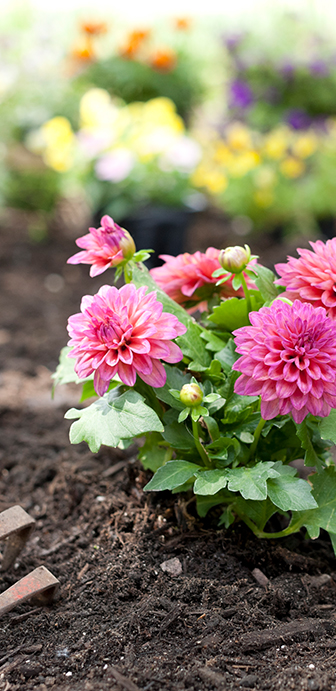
When you buy tubers, they can come in clusters or individuals. You can separate clusters if you like. Make sure the soil is rich and moist, but not wet. Plant your tubers individually if you want strategic single pops or arranged rows of Dahlias. Or plant clusters if you want bushy groups of flowers.
Put supportive stakes firmly in the ground wherever you’re planting Dahlias. This will prevent you from staking later (when you can harm the plant) and it will also act as a marker while the Dahlia is sprouting underground.
Small tubers (around 2 inches long) should be planted 3 inches deep and larger tubers go 6 or 7 inches deep. For single tubers, make sure to point the “eye” upwards. Space your tubers 3 to 4 feet. If you’re planting in containers, go big! At least 12 inches deep and wide, and it helps to mix some peat moss into the soil to help keep it moist. In garden beds or planters, water once at planting, but don’t water again until you see signs of sprouting above the soil. Expect 4 to 5 weeks.
-
companion planting
Support your Dahlias with companion plants that naturally repel pests. You can ward off slugs by paring with Creeping Comfrey. Coriander and Anise will repel aphids. As bonus, Anise attracts predatory wasps that feed on plant-sucking insects. Other plant helpers are Mint, Rosemary and Thyme.
-
blooms
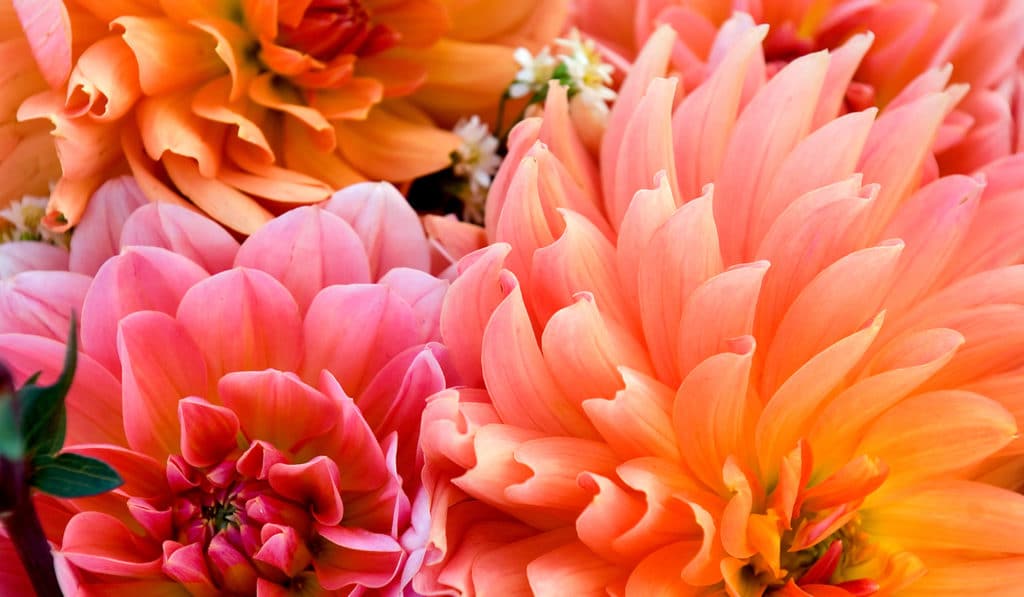
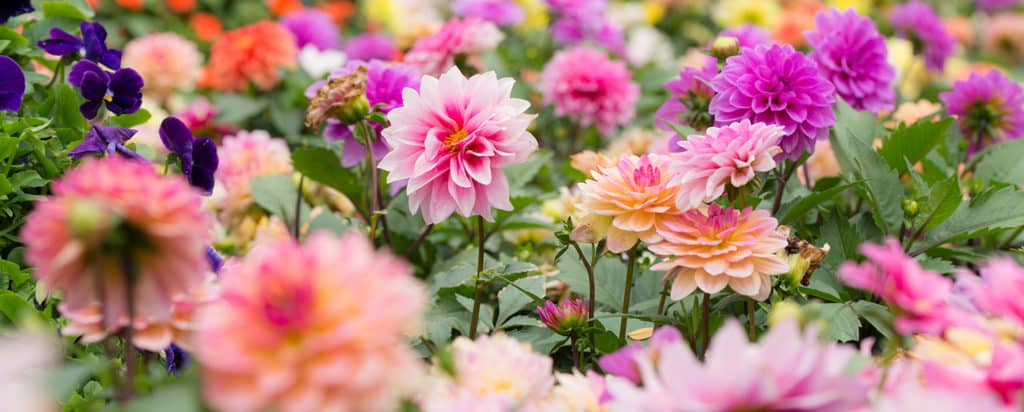
Dahlias will generally begin blooming 8 weeks after planting. Talk about “late bloomers” they usually get going in mid-July. Their hypnotically beautiful flowers range in size, from 2-inch lollipops to enormous 15 inch “dinner plate” blooms! Most varieties grow quite tall, 4 to 5 feet.
-
pest control
Small Dahlia plants can fall victim to slugs. Check them in the morning. Remove any slugs by hand and if this looks like an ongoing problem, go for slug control options like Ortho® Slug B Gon® Slug and Snail Bait.
Bugs like Japanese beetles can go after your blooms just as they’re reaching peak beauty. These shiny green little jerks don’t bite, so you can pick them off and toss them in soapy water to kill them. Or you can spray them with a gentle pesticide like Ortho® Beetle B Gon Max™ Beetle Killer.
troubleshooting
-
why the soft, rotting flowers?
Could be a Fungus called Fusarium. It’s common in soil. This fungus can infect tubers and causes stems to break down. Cut away the affected part of the stem without killing the whole plant, if you can. Prevention is the best cure for this fungus. Plant in soil with good drainage and plant in the full sunspots that Dahlias naturally crave.
-
why are my blooms tattered?
Probably Thrips, tiny bugs that look like mini grains of rice. They burrow into flower buds and eat the juicy petals from the inside. Often you don’t know until the flower opens up and you see the tattered bloom. Sometimes the buds won’t even open. Get those Thrips with a gentle pesticide like Ortho® Bug B Gon®ECO Insecticidal Soap.
-
what is this yucky grey mold?
Probably Powdery mildew. This is easy an easy fix. Prune affected areas and clear out any damp debris around your plant. Ensure air can flow around your Dahlia to prevent recurring problems.
-
why do a have yellowing leaves?
Might be a virus like Dahlia Mosaic Virus. These are spread by insect pests like Aphids and Leafhoppers. There’s no way to treat plant viruses. If you see Aphids (clusters of tiny yellowish-green bugs under the leaves) treat with a gentle pesticide like Ortho® Bug B Gon®ECO Insecticidal Soap. Sadly, you’ll need to remove the plant to prevent spreading to others.
-
why is my Dahlia Rotting?
Probably too cold and wet. Dahlias need warm, well-draining soil. See planting instructions. Wait until the Lilacs are in full bloom to plant. When planting tubers, water them once and resist watering until you see the first shoots above the soil.
dahlias
aka Dahlia Flower
How can one flower be packed with so many petals!? Dahlias are geometry and pure beauty together as one. And with over 20,000 hybrid variations, there’s always something new and exciting for your garden.
variations
There are over 42 types of dahlias and innumerable hybrids.
light
full sun
Dahlias like to be sheltered from winds, but they positively love the sun. Find a spot with as much sun as possible. South and west facing locations are best.
water + feeding
not too thirsty
Young Dahlias don’t need much water and overwatering can even cause rot. When Dahlias are grown up, you only need to water if they get less than inch in seven days. Potted plants need more regular watering. Dahlias like regular feedings. To supercharge those incredible blossoms, pick a fertilizer that emphasizes Phosphorous over Nitrogen, like Miracle-Gro® Water Soluble Bloom Booster plant food. Too much nitrogen will overly promote greenery growth and reduce the number of flowers.
toxic
yes!
Toxic to pets if ingested. For humans, Dahlia roots have a phytotoxic (toxic when exposed to light) substance that can irritate the skin.
size
mostly medium
Most Dahlia varieties grow as bushy plants that reach 3 to 4 feet. Border Dahlias varieties are bred for neat rows and get far less busy.
pro tip
top heavy
Most Dahlias grow such big blooms that they topple under the weight of their own beauty. There’s a lesson in there somewhere. And that lesson is to use sturdy stakes! Pre-place them wherever you plan to plant a Dahlia. If you’re adding a stake after planting, be careful not to lance that tuber. You can also use Tomato cages instead of stakes.
fun fact
annuals vs perennials
Dahlias are annuals in Canada, but perennials in warmer climates. If you truly love a certain Dahlia (it happens) you can gently dig up the tuber after the first hard frost, and replant next year. This is advanced gardening and takes serious planning and commitment.
beyond the basics
-
soil & potting
Dahlias like nutrient-rich, moist soil that has good drainage like Miracle-Gro® Potting Soil. They sprout from bulb-like “tubers” which sprout multiple shoots. You can start pre-growing them indoors in pots or wait until late Spring and plant directly outdoors. Those cold-sensitive Dahlia tubers need the soil to be warm. Pro tip: Wait until the neighbourhood Lilac bushes are in full bloom.
When you buy tubers, they can come in clusters or individuals. You can separate clusters if you like. Make sure the soil is rich and moist, but not wet. Plant your tubers individually if you want strategic single pops or arranged rows of Dahlias. Or plant clusters if you want bushy groups of flowers.
Put supportive stakes firmly in the ground wherever you’re planting Dahlias. This will prevent you from staking later (when you can harm the plant) and it will also act as a marker while the Dahlia is sprouting underground.
Small tubers (around 2 inches long) should be planted 3 inches deep and larger tubers go 6 or 7 inches deep. For single tubers, make sure to point the “eye” upwards. Space your tubers 3 to 4 feet. If you’re planting in containers, go big! At least 12 inches deep and wide, and it helps to mix some peat moss into the soil to help keep it moist. In garden beds or planters, water once at planting, but don’t water again until you see signs of sprouting above the soil. Expect 4 to 5 weeks.
-
companion planting
Support your Dahlias with companion plants that naturally repel pests. You can ward off slugs by paring with Creeping Comfrey. Coriander and Anise will repel aphids. As bonus, Anise attracts predatory wasps that feed on plant-sucking insects. Other plant helpers are Mint, Rosemary and Thyme.
-
blooms
Dahlias will generally begin blooming 8 weeks after planting. Talk about “late bloomers” they usually get going in mid-July. Their hypnotically beautiful flowers range in size, from 2-inch lollipops to enormous 15 inch “dinner plate” blooms! Most varieties grow quite tall, 4 to 5 feet.
-
pest control
Small Dahlia plants can fall victim to slugs. Check them in the morning. Remove any slugs by hand and if this looks like an ongoing problem, go for slug control options like Ortho® Slug B Gon® Slug and Snail Bait.
Bugs like Japanese beetles can go after your blooms just as they’re reaching peak beauty. These shiny green little jerks don’t bite, so you can pick them off and toss them in soapy water to kill them. Or you can spray them with a gentle pesticide like Ortho® Beetle B Gon Max™ Beetle Killer.
troubleshooting
-
why the soft, rotting flowers?
Could be a Fungus called Fusarium. It’s common in soil. This fungus can infect tubers and causes stems to break down. Cut away the affected part of the stem without killing the whole plant, if you can. Prevention is the best cure for this fungus. Plant in soil with good drainage and plant in the full sunspots that Dahlias naturally crave.
-
why are my blooms tattered?
Probably Thrips, tiny bugs that look like mini grains of rice. They burrow into flower buds and eat the juicy petals from the inside. Often you don’t know until the flower opens up and you see the tattered bloom. Sometimes the buds won’t even open. Get those Thrips with a gentle pesticide like Ortho® Bug B Gon®ECO Insecticidal Soap.
-
what is this yucky grey mold?
Probably Powdery mildew. This is easy an easy fix. Prune affected areas and clear out any damp debris around your plant. Ensure air can flow around your Dahlia to prevent recurring problems.
-
why do a have yellowing leaves?
Might be a virus like Dahlia Mosaic Virus. These are spread by insect pests like Aphids and Leafhoppers. There’s no way to treat plant viruses. If you see Aphids (clusters of tiny yellowish-green bugs under the leaves) treat with a gentle pesticide like Ortho® Bug B Gon®ECO Insecticidal Soap. Sadly, you’ll need to remove the plant to prevent spreading to others.
-
why is my Dahlia Rotting?
Probably too cold and wet. Dahlias need warm, well-draining soil. See planting instructions. Wait until the Lilacs are in full bloom to plant. When planting tubers, water them once and resist watering until you see the first shoots above the soil.
dahlias
aka Dahlia Flower
How can one flower be packed with so many petals!? Dahlias are geometry and pure beauty together as one. And with over 20,000 hybrid variations, there’s always something new and exciting for your garden.
variations
There are over 42 types of dahlias and innumerable hybrids.
light
full sun
Dahlias like to be sheltered from winds, but they positively love the sun. Find a spot with as much sun as possible. South and west facing locations are best.
water + feeding
not too thirsty
Young Dahlias don’t need much water and overwatering can even cause rot. When Dahlias are grown up, you only need to water if they get less than inch in seven days. Potted plants need more regular watering. Dahlias like regular feedings. To supercharge those incredible blossoms, pick a fertilizer that emphasizes Phosphorous over Nitrogen, like Miracle-Gro® Water Soluble Bloom Booster plant food. Too much nitrogen will overly promote greenery growth and reduce the number of flowers.
toxic
yes!
Toxic to pets if ingested. For humans, Dahlia roots have a phytotoxic (toxic when exposed to light) substance that can irritate the skin.
size
mostly medium
Most Dahlia varieties grow as bushy plants that reach 3 to 4 feet. Border Dahlias varieties are bred for neat rows and get far less busy.
pro tip
top heavy
Most Dahlias grow such big blooms that they topple under the weight of their own beauty. There’s a lesson in there somewhere. And that lesson is to use sturdy stakes! Pre-place them wherever you plan to plant a Dahlia. If you’re adding a stake after planting, be careful not to lance that tuber. You can also use Tomato cages instead of stakes.
fun fact
annuals vs perennials
Dahlias are annuals in Canada, but perennials in warmer climates. If you truly love a certain Dahlia (it happens) you can gently dig up the tuber after the first hard frost, and replant next year. This is advanced gardening and takes serious planning and commitment.
beyond the basics
-
soil & potting
Dahlias like nutrient-rich, moist soil that has good drainage like Miracle-Gro® Potting Soil. They sprout from bulb-like “tubers” which sprout multiple shoots. You can start pre-growing them indoors in pots or wait until late Spring and plant directly outdoors. Those cold-sensitive Dahlia tubers need the soil to be warm. Pro tip: Wait until the neighbourhood Lilac bushes are in full bloom.
When you buy tubers, they can come in clusters or individuals. You can separate clusters if you like. Make sure the soil is rich and moist, but not wet. Plant your tubers individually if you want strategic single pops or arranged rows of Dahlias. Or plant clusters if you want bushy groups of flowers.
Put supportive stakes firmly in the ground wherever you’re planting Dahlias. This will prevent you from staking later (when you can harm the plant) and it will also act as a marker while the Dahlia is sprouting underground.
Small tubers (around 2 inches long) should be planted 3 inches deep and larger tubers go 6 or 7 inches deep. For single tubers, make sure to point the “eye” upwards. Space your tubers 3 to 4 feet. If you’re planting in containers, go big! At least 12 inches deep and wide, and it helps to mix some peat moss into the soil to help keep it moist. In garden beds or planters, water once at planting, but don’t water again until you see signs of sprouting above the soil. Expect 4 to 5 weeks.
-
companion planting
Support your Dahlias with companion plants that naturally repel pests. You can ward off slugs by paring with Creeping Comfrey. Coriander and Anise will repel aphids. As bonus, Anise attracts predatory wasps that feed on plant-sucking insects. Other plant helpers are Mint, Rosemary and Thyme.
-
blooms
Dahlias will generally begin blooming 8 weeks after planting. Talk about “late bloomers” they usually get going in mid-July. Their hypnotically beautiful flowers range in size, from 2-inch lollipops to enormous 15 inch “dinner plate” blooms! Most varieties grow quite tall, 4 to 5 feet.
-
pest control
Small Dahlia plants can fall victim to slugs. Check them in the morning. Remove any slugs by hand and if this looks like an ongoing problem, go for slug control options like Ortho® Slug B Gon® Slug and Snail Bait.
Bugs like Japanese beetles can go after your blooms just as they’re reaching peak beauty. These shiny green little jerks don’t bite, so you can pick them off and toss them in soapy water to kill them. Or you can spray them with a gentle pesticide like Ortho® Beetle B Gon Max™ Beetle Killer.

troubleshooting
-
why the soft, rotting flowers?
Could be a Fungus called Fusarium. It’s common in soil. This fungus can infect tubers and causes stems to break down. Cut away the affected part of the stem without killing the whole plant, if you can. Prevention is the best cure for this fungus. Plant in soil with good drainage and plant in the full sunspots that Dahlias naturally crave.
-
why are my blooms tattered?
Probably Thrips, tiny bugs that look like mini grains of rice. They burrow into flower buds and eat the juicy petals from the inside. Often you don’t know until the flower opens up and you see the tattered bloom. Sometimes the buds won’t even open. Get those Thrips with a gentle pesticide like Ortho® Bug B Gon®ECO Insecticidal Soap.
-
what is this yucky grey mold?
Probably Powdery mildew. This is easy an easy fix. Prune affected areas and clear out any damp debris around your plant. Ensure air can flow around your Dahlia to prevent recurring problems.
-
why do a have yellowing leaves?
Might be a virus like Dahlia Mosaic Virus. These are spread by insect pests like Aphids and Leafhoppers. There’s no way to treat plant viruses. If you see Aphids (clusters of tiny yellowish-green bugs under the leaves) treat with a gentle pesticide like Ortho® Bug B Gon®ECO Insecticidal Soap. Sadly, you’ll need to remove the plant to prevent spreading to others.
-
why is my Dahlia Rotting?
Probably too cold and wet. Dahlias need warm, well-draining soil. See planting instructions. Wait until the Lilacs are in full bloom to plant. When planting tubers, water them once and resist watering until you see the first shoots above the soil.
dahlias
aka Dahlia Flower
How can one flower be packed with so many petals!? Dahlias are geometry and pure beauty together as one. And with over 20,000 hybrid variations, there’s always something new and exciting for your garden.
variations
There are over 42 types of dahlias and innumerable hybrids.
light
full sun
Dahlias like to be sheltered from winds, but they positively love the sun. Find a spot with as much sun as possible. South and west facing locations are best.
water + feeding
not too thirsty
Young Dahlias don’t need much water and overwatering can even cause rot. When Dahlias are grown up, you only need to water if they get less than inch in seven days. Potted plants need more regular watering. Dahlias like regular feedings. To supercharge those incredible blossoms, pick a fertilizer that emphasizes Phosphorous over Nitrogen, like Miracle-Gro® Water Soluble Bloom Booster plant food. Too much nitrogen will overly promote greenery growth and reduce the number of flowers.
toxic
yes!
Toxic to pets if ingested. For humans, Dahlia roots have a phytotoxic (toxic when exposed to light) substance that can irritate the skin.
size
mostly medium
Most Dahlia varieties grow as bushy plants that reach 3 to 4 feet. Border Dahlias varieties are bred for neat rows and get far less busy.
pro tip
top heavy
Most Dahlias grow such big blooms that they topple under the weight of their own beauty. There’s a lesson in there somewhere. And that lesson is to use sturdy stakes! Pre-place them wherever you plan to plant a Dahlia. If you’re adding a stake after planting, be careful not to lance that tuber. You can also use Tomato cages instead of stakes.
fun fact
annuals vs perennials
Dahlias are annuals in Canada, but perennials in warmer climates. If you truly love a certain Dahlia (it happens) you can gently dig up the tuber after the first hard frost, and replant next year. This is advanced gardening and takes serious planning and commitment.
beyond the basics
-
soil & potting
Dahlias like nutrient-rich, moist soil that has good drainage like Miracle-Gro® Potting Soil. They sprout from bulb-like “tubers” which sprout multiple shoots. You can start pre-growing them indoors in pots or wait until late Spring and plant directly outdoors. Those cold-sensitive Dahlia tubers need the soil to be warm. Pro tip: Wait until the neighbourhood Lilac bushes are in full bloom.
When you buy tubers, they can come in clusters or individuals. You can separate clusters if you like. Make sure the soil is rich and moist, but not wet. Plant your tubers individually if you want strategic single pops or arranged rows of Dahlias. Or plant clusters if you want bushy groups of flowers.
Put supportive stakes firmly in the ground wherever you’re planting Dahlias. This will prevent you from staking later (when you can harm the plant) and it will also act as a marker while the Dahlia is sprouting underground.
Small tubers (around 2 inches long) should be planted 3 inches deep and larger tubers go 6 or 7 inches deep. For single tubers, make sure to point the “eye” upwards. Space your tubers 3 to 4 feet. If you’re planting in containers, go big! At least 12 inches deep and wide, and it helps to mix some peat moss into the soil to help keep it moist. In garden beds or planters, water once at planting, but don’t water again until you see signs of sprouting above the soil. Expect 4 to 5 weeks.
-
companion planting
Support your Dahlias with companion plants that naturally repel pests. You can ward off slugs by paring with Creeping Comfrey. Coriander and Anise will repel aphids. As bonus, Anise attracts predatory wasps that feed on plant-sucking insects. Other plant helpers are Mint, Rosemary and Thyme.
-
blooms
Dahlias will generally begin blooming 8 weeks after planting. Talk about “late bloomers” they usually get going in mid-July. Their hypnotically beautiful flowers range in size, from 2-inch lollipops to enormous 15 inch “dinner plate” blooms! Most varieties grow quite tall, 4 to 5 feet.
-
pest control
Small Dahlia plants can fall victim to slugs. Check them in the morning. Remove any slugs by hand and if this looks like an ongoing problem, go for slug control options like Ortho® Slug B Gon® Slug and Snail Bait.
Bugs like Japanese beetles can go after your blooms just as they’re reaching peak beauty. These shiny green little jerks don’t bite, so you can pick them off and toss them in soapy water to kill them. Or you can spray them with a gentle pesticide like Ortho® Beetle B Gon Max™ Beetle Killer.
troubleshooting
-
why the soft, rotting flowers?
Could be a Fungus called Fusarium. It’s common in soil. This fungus can infect tubers and causes stems to break down. Cut away the affected part of the stem without killing the whole plant, if you can. Prevention is the best cure for this fungus. Plant in soil with good drainage and plant in the full sunspots that Dahlias naturally crave.
-
why are my blooms tattered?
Probably Thrips, tiny bugs that look like mini grains of rice. They burrow into flower buds and eat the juicy petals from the inside. Often you don’t know until the flower opens up and you see the tattered bloom. Sometimes the buds won’t even open. Get those Thrips with a gentle pesticide like Ortho® Bug B Gon®ECO Insecticidal Soap.
-
what is this yucky grey mold?
Probably Powdery mildew. This is easy an easy fix. Prune affected areas and clear out any damp debris around your plant. Ensure air can flow around your Dahlia to prevent recurring problems.
-
why do a have yellowing leaves?
Might be a virus like Dahlia Mosaic Virus. These are spread by insect pests like Aphids and Leafhoppers. There’s no way to treat plant viruses. If you see Aphids (clusters of tiny yellowish-green bugs under the leaves) treat with a gentle pesticide like Ortho® Bug B Gon®ECO Insecticidal Soap. Sadly, you’ll need to remove the plant to prevent spreading to others.
-
why is my Dahlia Rotting?
Probably too cold and wet. Dahlias need warm, well-draining soil. See planting instructions. Wait until the Lilacs are in full bloom to plant. When planting tubers, water them once and resist watering until you see the first shoots above the soil.
dahlias
aka Dahlia Flower
How can one flower be packed with so many petals!? Dahlias are geometry and pure beauty together as one. And with over 20,000 hybrid variations, there’s always something new and exciting for your garden.
variations
There are over 42 types of dahlias and innumerable hybrids.
light
full sun
Dahlias like to be sheltered from winds, but they positively love the sun. Find a spot with as much sun as possible. South and west facing locations are best.
water + feeding
not too thirsty
Young Dahlias don’t need much water and overwatering can even cause rot. When Dahlias are grown up, you only need to water if they get less than inch in seven days. Potted plants need more regular watering. Dahlias like regular feedings. To supercharge those incredible blossoms, pick a fertilizer that emphasizes Phosphorous over Nitrogen, like Miracle-Gro® Water Soluble Bloom Booster plant food. Too much nitrogen will overly promote greenery growth and reduce the number of flowers.
toxic
yes!
Toxic to pets if ingested. For humans, Dahlia roots have a phytotoxic (toxic when exposed to light) substance that can irritate the skin.
size
mostly medium
Most Dahlia varieties grow as bushy plants that reach 3 to 4 feet. Border Dahlias varieties are bred for neat rows and get far less busy.
pro tip
top heavy
Most Dahlias grow such big blooms that they topple under the weight of their own beauty. There’s a lesson in there somewhere. And that lesson is to use sturdy stakes! Pre-place them wherever you plan to plant a Dahlia. If you’re adding a stake after planting, be careful not to lance that tuber. You can also use Tomato cages instead of stakes.
fun fact
annuals vs perennials
Dahlias are annuals in Canada, but perennials in warmer climates. If you truly love a certain Dahlia (it happens) you can gently dig up the tuber after the first hard frost, and replant next year. This is advanced gardening and takes serious planning and commitment.
beyond the basics
-
soil & potting
Dahlias like nutrient-rich, moist soil that has good drainage like Miracle-Gro® Potting Soil. They sprout from bulb-like “tubers” which sprout multiple shoots. You can start pre-growing them indoors in pots or wait until late Spring and plant directly outdoors. Those cold-sensitive Dahlia tubers need the soil to be warm. Pro tip: Wait until the neighbourhood Lilac bushes are in full bloom.
When you buy tubers, they can come in clusters or individuals. You can separate clusters if you like. Make sure the soil is rich and moist, but not wet. Plant your tubers individually if you want strategic single pops or arranged rows of Dahlias. Or plant clusters if you want bushy groups of flowers.
Put supportive stakes firmly in the ground wherever you’re planting Dahlias. This will prevent you from staking later (when you can harm the plant) and it will also act as a marker while the Dahlia is sprouting underground.
Small tubers (around 2 inches long) should be planted 3 inches deep and larger tubers go 6 or 7 inches deep. For single tubers, make sure to point the “eye” upwards. Space your tubers 3 to 4 feet. If you’re planting in containers, go big! At least 12 inches deep and wide, and it helps to mix some peat moss into the soil to help keep it moist. In garden beds or planters, water once at planting, but don’t water again until you see signs of sprouting above the soil. Expect 4 to 5 weeks.
-
companion planting
Support your Dahlias with companion plants that naturally repel pests. You can ward off slugs by paring with Creeping Comfrey. Coriander and Anise will repel aphids. As bonus, Anise attracts predatory wasps that feed on plant-sucking insects. Other plant helpers are Mint, Rosemary and Thyme.
-
blooms
Dahlias will generally begin blooming 8 weeks after planting. Talk about “late bloomers” they usually get going in mid-July. Their hypnotically beautiful flowers range in size, from 2-inch lollipops to enormous 15 inch “dinner plate” blooms! Most varieties grow quite tall, 4 to 5 feet.
-
pest control
Small Dahlia plants can fall victim to slugs. Check them in the morning. Remove any slugs by hand and if this looks like an ongoing problem, go for slug control options like Ortho® Slug B Gon® Slug and Snail Bait.
Bugs like Japanese beetles can go after your blooms just as they’re reaching peak beauty. These shiny green little jerks don’t bite, so you can pick them off and toss them in soapy water to kill them. Or you can spray them with a gentle pesticide like Ortho® Beetle B Gon Max™ Beetle Killer.

troubleshooting
-
why the soft, rotting flowers?
Could be a Fungus called Fusarium. It’s common in soil. This fungus can infect tubers and causes stems to break down. Cut away the affected part of the stem without killing the whole plant, if you can. Prevention is the best cure for this fungus. Plant in soil with good drainage and plant in the full sunspots that Dahlias naturally crave.
-
why are my blooms tattered?
Probably Thrips, tiny bugs that look like mini grains of rice. They burrow into flower buds and eat the juicy petals from the inside. Often you don’t know until the flower opens up and you see the tattered bloom. Sometimes the buds won’t even open. Get those Thrips with a gentle pesticide like Ortho® Bug B Gon®ECO Insecticidal Soap.
-
what is this yucky grey mold?
Probably Powdery mildew. This is easy an easy fix. Prune affected areas and clear out any damp debris around your plant. Ensure air can flow around your Dahlia to prevent recurring problems.
-
why do a have yellowing leaves?
Might be a virus like Dahlia Mosaic Virus. These are spread by insect pests like Aphids and Leafhoppers. There’s no way to treat plant viruses. If you see Aphids (clusters of tiny yellowish-green bugs under the leaves) treat with a gentle pesticide like Ortho® Bug B Gon®ECO Insecticidal Soap. Sadly, you’ll need to remove the plant to prevent spreading to others.
-
why is my Dahlia Rotting?
Probably too cold and wet. Dahlias need warm, well-draining soil. See planting instructions. Wait until the Lilacs are in full bloom to plant. When planting tubers, water them once and resist watering until you see the first shoots above the soil.
dahlias
aka Dahlia Flower
How can one flower be packed with so many petals!? Dahlias are geometry and pure beauty together as one. And with over 20,000 hybrid variations, there’s always something new and exciting for your garden.
variations
There are over 42 types of dahlias and innumerable hybrids.
light
full sun
Dahlias like to be sheltered from winds, but they positively love the sun. Find a spot with as much sun as possible. South and west facing locations are best.
water + feeding
not too thirsty
Young Dahlias don’t need much water and overwatering can even cause rot. When Dahlias are grown up, you only need to water if they get less than inch in seven days. Potted plants need more regular watering. Dahlias like regular feedings. To supercharge those incredible blossoms, pick a fertilizer that emphasizes Phosphorous over Nitrogen, like Miracle-Gro® Water Soluble Bloom Booster plant food. Too much nitrogen will overly promote greenery growth and reduce the number of flowers.
toxic
yes!
Toxic to pets if ingested. For humans, Dahlia roots have a phytotoxic (toxic when exposed to light) substance that can irritate the skin.
size
mostly medium
Most Dahlia varieties grow as bushy plants that reach 3 to 4 feet. Border Dahlias varieties are bred for neat rows and get far less busy.
pro tip
top heavy
Most Dahlias grow such big blooms that they topple under the weight of their own beauty. There’s a lesson in there somewhere. And that lesson is to use sturdy stakes! Pre-place them wherever you plan to plant a Dahlia. If you’re adding a stake after planting, be careful not to lance that tuber. You can also use Tomato cages instead of stakes.
fun fact
annuals vs perennials
Dahlias are annuals in Canada, but perennials in warmer climates. If you truly love a certain Dahlia (it happens) you can gently dig up the tuber after the first hard frost, and replant next year. This is advanced gardening and takes serious planning and commitment.
beyond the basics
-
soil & potting
Dahlias like nutrient-rich, moist soil that has good drainage like Miracle-Gro® Potting Soil. They sprout from bulb-like “tubers” which sprout multiple shoots. You can start pre-growing them indoors in pots or wait until late Spring and plant directly outdoors. Those cold-sensitive Dahlia tubers need the soil to be warm. Pro tip: Wait until the neighbourhood Lilac bushes are in full bloom.
When you buy tubers, they can come in clusters or individuals. You can separate clusters if you like. Make sure the soil is rich and moist, but not wet. Plant your tubers individually if you want strategic single pops or arranged rows of Dahlias. Or plant clusters if you want bushy groups of flowers.
Put supportive stakes firmly in the ground wherever you’re planting Dahlias. This will prevent you from staking later (when you can harm the plant) and it will also act as a marker while the Dahlia is sprouting underground.
Small tubers (around 2 inches long) should be planted 3 inches deep and larger tubers go 6 or 7 inches deep. For single tubers, make sure to point the “eye” upwards. Space your tubers 3 to 4 feet. If you’re planting in containers, go big! At least 12 inches deep and wide, and it helps to mix some peat moss into the soil to help keep it moist. In garden beds or planters, water once at planting, but don’t water again until you see signs of sprouting above the soil. Expect 4 to 5 weeks.
-
companion planting
Support your Dahlias with companion plants that naturally repel pests. You can ward off slugs by paring with Creeping Comfrey. Coriander and Anise will repel aphids. As bonus, Anise attracts predatory wasps that feed on plant-sucking insects. Other plant helpers are Mint, Rosemary and Thyme.
-
blooms
Dahlias will generally begin blooming 8 weeks after planting. Talk about “late bloomers” they usually get going in mid-July. Their hypnotically beautiful flowers range in size, from 2-inch lollipops to enormous 15 inch “dinner plate” blooms! Most varieties grow quite tall, 4 to 5 feet.
-
pest control
Small Dahlia plants can fall victim to slugs. Check them in the morning. Remove any slugs by hand and if this looks like an ongoing problem, go for slug control options like Ortho® Slug B Gon® Slug and Snail Bait.
Bugs like Japanese beetles can go after your blooms just as they’re reaching peak beauty. These shiny green little jerks don’t bite, so you can pick them off and toss them in soapy water to kill them. Or you can spray them with a gentle pesticide like Ortho® Beetle B Gon Max™ Beetle Killer.
troubleshooting
-
why the soft, rotting flowers?
Could be a Fungus called Fusarium. It’s common in soil. This fungus can infect tubers and causes stems to break down. Cut away the affected part of the stem without killing the whole plant, if you can. Prevention is the best cure for this fungus. Plant in soil with good drainage and plant in the full sunspots that Dahlias naturally crave.
-
why are my blooms tattered?
Probably Thrips, tiny bugs that look like mini grains of rice. They burrow into flower buds and eat the juicy petals from the inside. Often you don’t know until the flower opens up and you see the tattered bloom. Sometimes the buds won’t even open. Get those Thrips with a gentle pesticide like Ortho® Bug B Gon®ECO Insecticidal Soap.
-
what is this yucky grey mold?
Probably Powdery mildew. This is easy an easy fix. Prune affected areas and clear out any damp debris around your plant. Ensure air can flow around your Dahlia to prevent recurring problems.
-
why do a have yellowing leaves?
Might be a virus like Dahlia Mosaic Virus. These are spread by insect pests like Aphids and Leafhoppers. There’s no way to treat plant viruses. If you see Aphids (clusters of tiny yellowish-green bugs under the leaves) treat with a gentle pesticide like Ortho® Bug B Gon®ECO Insecticidal Soap. Sadly, you’ll need to remove the plant to prevent spreading to others.
-
why is my Dahlia Rotting?
Probably too cold and wet. Dahlias need warm, well-draining soil. See planting instructions. Wait until the Lilacs are in full bloom to plant. When planting tubers, water them once and resist watering until you see the first shoots above the soil.
dahlias
aka Dahlia Flower
How can one flower be packed with so many petals!? Dahlias are geometry and pure beauty together as one. And with over 20,000 hybrid variations, there’s always something new and exciting for your garden.
variations
There are over 42 types of dahlias and innumerable hybrids.
light
full sun
Dahlias like to be sheltered from winds, but they positively love the sun. Find a spot with as much sun as possible. South and west facing locations are best.
water + feeding
not too thirsty
Young Dahlias don’t need much water and overwatering can even cause rot. When Dahlias are grown up, you only need to water if they get less than inch in seven days. Potted plants need more regular watering. Dahlias like regular feedings. To supercharge those incredible blossoms, pick a fertilizer that emphasizes Phosphorous over Nitrogen, like Miracle-Gro® Water Soluble Bloom Booster plant food. Too much nitrogen will overly promote greenery growth and reduce the number of flowers.
toxic
yes!
Toxic to pets if ingested. For humans, Dahlia roots have a phytotoxic (toxic when exposed to light) substance that can irritate the skin.
size
mostly medium
Most Dahlia varieties grow as bushy plants that reach 3 to 4 feet. Border Dahlias varieties are bred for neat rows and get far less busy.
pro tip
top heavy
Most Dahlias grow such big blooms that they topple under the weight of their own beauty. There’s a lesson in there somewhere. And that lesson is to use sturdy stakes! Pre-place them wherever you plan to plant a Dahlia. If you’re adding a stake after planting, be careful not to lance that tuber. You can also use Tomato cages instead of stakes.
fun fact
annuals vs perennials
Dahlias are annuals in Canada, but perennials in warmer climates. If you truly love a certain Dahlia (it happens) you can gently dig up the tuber after the first hard frost, and replant next year. This is advanced gardening and takes serious planning and commitment.

beyond the basics
-
soil & potting
Dahlias like nutrient-rich, moist soil that has good drainage like Miracle-Gro® Potting Soil. They sprout from bulb-like “tubers” which sprout multiple shoots. You can start pre-growing them indoors in pots or wait until late Spring and plant directly outdoors. Those cold-sensitive Dahlia tubers need the soil to be warm. Pro tip: Wait until the neighbourhood Lilac bushes are in full bloom.
When you buy tubers, they can come in clusters or individuals. You can separate clusters if you like. Make sure the soil is rich and moist, but not wet. Plant your tubers individually if you want strategic single pops or arranged rows of Dahlias. Or plant clusters if you want bushy groups of flowers.
Put supportive stakes firmly in the ground wherever you’re planting Dahlias. This will prevent you from staking later (when you can harm the plant) and it will also act as a marker while the Dahlia is sprouting underground.
Small tubers (around 2 inches long) should be planted 3 inches deep and larger tubers go 6 or 7 inches deep. For single tubers, make sure to point the “eye” upwards. Space your tubers 3 to 4 feet. If you’re planting in containers, go big! At least 12 inches deep and wide, and it helps to mix some peat moss into the soil to help keep it moist. In garden beds or planters, water once at planting, but don’t water again until you see signs of sprouting above the soil. Expect 4 to 5 weeks.
-
companion planting
Support your Dahlias with companion plants that naturally repel pests. You can ward off slugs by paring with Creeping Comfrey. Coriander and Anise will repel aphids. As bonus, Anise attracts predatory wasps that feed on plant-sucking insects. Other plant helpers are Mint, Rosemary and Thyme.
-
blooms
Dahlias will generally begin blooming 8 weeks after planting. Talk about “late bloomers” they usually get going in mid-July. Their hypnotically beautiful flowers range in size, from 2-inch lollipops to enormous 15 inch “dinner plate” blooms! Most varieties grow quite tall, 4 to 5 feet.
-
pest control
Small Dahlia plants can fall victim to slugs. Check them in the morning. Remove any slugs by hand and if this looks like an ongoing problem, go for slug control options like Ortho® Slug B Gon® Slug and Snail Bait.
Bugs like Japanese beetles can go after your blooms just as they’re reaching peak beauty. These shiny green little jerks don’t bite, so you can pick them off and toss them in soapy water to kill them. Or you can spray them with a gentle pesticide like Ortho® Beetle B Gon Max™ Beetle Killer.

troubleshooting
-
why the soft, rotting flowers?
Could be a Fungus called Fusarium. It’s common in soil. This fungus can infect tubers and causes stems to break down. Cut away the affected part of the stem without killing the whole plant, if you can. Prevention is the best cure for this fungus. Plant in soil with good drainage and plant in the full sunspots that Dahlias naturally crave.
-
why are my blooms tattered?
Probably Thrips, tiny bugs that look like mini grains of rice. They burrow into flower buds and eat the juicy petals from the inside. Often you don’t know until the flower opens up and you see the tattered bloom. Sometimes the buds won’t even open. Get those Thrips with a gentle pesticide like Ortho® Bug B Gon®ECO Insecticidal Soap.
-
what is this yucky grey mold?
Probably Powdery mildew. This is easy an easy fix. Prune affected areas and clear out any damp debris around your plant. Ensure air can flow around your Dahlia to prevent recurring problems.
-
why do a have yellowing leaves?
Might be a virus like Dahlia Mosaic Virus. These are spread by insect pests like Aphids and Leafhoppers. There’s no way to treat plant viruses. If you see Aphids (clusters of tiny yellowish-green bugs under the leaves) treat with a gentle pesticide like Ortho® Bug B Gon®ECO Insecticidal Soap. Sadly, you’ll need to remove the plant to prevent spreading to others.
-
why is my Dahlia Rotting?
Probably too cold and wet. Dahlias need warm, well-draining soil. See planting instructions. Wait until the Lilacs are in full bloom to plant. When planting tubers, water them once and resist watering until you see the first shoots above the soil.
dahlias
aka Dahlia Flower
How can one flower be packed with so many petals!? Dahlias are geometry and pure beauty together as one. And with over 20,000 hybrid variations, there’s always something new and exciting for your garden.
variations
There are over 42 types of dahlias and innumerable hybrids.
light
full sun
Dahlias like to be sheltered from winds, but they positively love the sun. Find a spot with as much sun as possible. South and west facing locations are best.
water + feeding
not too thirsty
Young Dahlias don’t need much water and overwatering can even cause rot. When Dahlias are grown up, you only need to water if they get less than inch in seven days. Potted plants need more regular watering. Dahlias like regular feedings. To supercharge those incredible blossoms, pick a fertilizer that emphasizes Phosphorous over Nitrogen, like Miracle-Gro® Water Soluble Bloom Booster plant food. Too much nitrogen will overly promote greenery growth and reduce the number of flowers.
toxic
yes!
Toxic to pets if ingested. For humans, Dahlia roots have a phytotoxic (toxic when exposed to light) substance that can irritate the skin.
size
mostly medium
Most Dahlia varieties grow as bushy plants that reach 3 to 4 feet. Border Dahlias varieties are bred for neat rows and get far less busy.
pro tip
top heavy
Most Dahlias grow such big blooms that they topple under the weight of their own beauty. There’s a lesson in there somewhere. And that lesson is to use sturdy stakes! Pre-place them wherever you plan to plant a Dahlia. If you’re adding a stake after planting, be careful not to lance that tuber. You can also use Tomato cages instead of stakes.
fun fact
annuals vs perennials
Dahlias are annuals in Canada, but perennials in warmer climates. If you truly love a certain Dahlia (it happens) you can gently dig up the tuber after the first hard frost, and replant next year. This is advanced gardening and takes serious planning and commitment.
beyond the basics
-
soil & potting
Dahlias like nutrient-rich, moist soil that has good drainage like Miracle-Gro® Potting Soil. They sprout from bulb-like “tubers” which sprout multiple shoots. You can start pre-growing them indoors in pots or wait until late Spring and plant directly outdoors. Those cold-sensitive Dahlia tubers need the soil to be warm. Pro tip: Wait until the neighbourhood Lilac bushes are in full bloom.
When you buy tubers, they can come in clusters or individuals. You can separate clusters if you like. Make sure the soil is rich and moist, but not wet. Plant your tubers individually if you want strategic single pops or arranged rows of Dahlias. Or plant clusters if you want bushy groups of flowers.
Put supportive stakes firmly in the ground wherever you’re planting Dahlias. This will prevent you from staking later (when you can harm the plant) and it will also act as a marker while the Dahlia is sprouting underground.
Small tubers (around 2 inches long) should be planted 3 inches deep and larger tubers go 6 or 7 inches deep. For single tubers, make sure to point the “eye” upwards. Space your tubers 3 to 4 feet. If you’re planting in containers, go big! At least 12 inches deep and wide, and it helps to mix some peat moss into the soil to help keep it moist. In garden beds or planters, water once at planting, but don’t water again until you see signs of sprouting above the soil. Expect 4 to 5 weeks.
-
companion planting
Support your Dahlias with companion plants that naturally repel pests. You can ward off slugs by paring with Creeping Comfrey. Coriander and Anise will repel aphids. As bonus, Anise attracts predatory wasps that feed on plant-sucking insects. Other plant helpers are Mint, Rosemary and Thyme.
-
blooms
Dahlias will generally begin blooming 8 weeks after planting. Talk about “late bloomers” they usually get going in mid-July. Their hypnotically beautiful flowers range in size, from 2-inch lollipops to enormous 15 inch “dinner plate” blooms! Most varieties grow quite tall, 4 to 5 feet.
-
pest control
Small Dahlia plants can fall victim to slugs. Check them in the morning. Remove any slugs by hand and if this looks like an ongoing problem, go for slug control options like Ortho® Slug B Gon® Slug and Snail Bait.
Bugs like Japanese beetles can go after your blooms just as they’re reaching peak beauty. These shiny green little jerks don’t bite, so you can pick them off and toss them in soapy water to kill them. Or you can spray them with a gentle pesticide like Ortho® Beetle B Gon Max™ Beetle Killer.
troubleshooting
-
why the soft, rotting flowers?
Could be a Fungus called Fusarium. It’s common in soil. This fungus can infect tubers and causes stems to break down. Cut away the affected part of the stem without killing the whole plant, if you can. Prevention is the best cure for this fungus. Plant in soil with good drainage and plant in the full sunspots that Dahlias naturally crave.
-
why are my blooms tattered?
Probably Thrips, tiny bugs that look like mini grains of rice. They burrow into flower buds and eat the juicy petals from the inside. Often you don’t know until the flower opens up and you see the tattered bloom. Sometimes the buds won’t even open. Get those Thrips with a gentle pesticide like Ortho® Bug B Gon®ECO Insecticidal Soap.
-
what is this yucky grey mold?
Probably Powdery mildew. This is easy an easy fix. Prune affected areas and clear out any damp debris around your plant. Ensure air can flow around your Dahlia to prevent recurring problems.
-
why do a have yellowing leaves?
Might be a virus like Dahlia Mosaic Virus. These are spread by insect pests like Aphids and Leafhoppers. There’s no way to treat plant viruses. If you see Aphids (clusters of tiny yellowish-green bugs under the leaves) treat with a gentle pesticide like Ortho® Bug B Gon®ECO Insecticidal Soap. Sadly, you’ll need to remove the plant to prevent spreading to others.
-
why is my Dahlia Rotting?
Probably too cold and wet. Dahlias need warm, well-draining soil. See planting instructions. Wait until the Lilacs are in full bloom to plant. When planting tubers, water them once and resist watering until you see the first shoots above the soil.
dahlias
aka Dahlia Flower
How can one flower be packed with so many petals!? Dahlias are geometry and pure beauty together as one. And with over 20,000 hybrid variations, there’s always something new and exciting for your garden.
variations
There are over 42 types of dahlias and innumerable hybrids.
light
full sun
Dahlias like to be sheltered from winds, but they positively love the sun. Find a spot with as much sun as possible. South and west facing locations are best.
water + feeding
not too thirsty
Young Dahlias don’t need much water and overwatering can even cause rot. When Dahlias are grown up, you only need to water if they get less than inch in seven days. Potted plants need more regular watering. Dahlias like regular feedings. To supercharge those incredible blossoms, pick a fertilizer that emphasizes Phosphorous over Nitrogen, like Miracle-Gro® Water Soluble Bloom Booster plant food. Too much nitrogen will overly promote greenery growth and reduce the number of flowers.
toxic
yes!
Toxic to pets if ingested. For humans, Dahlia roots have a phytotoxic (toxic when exposed to light) substance that can irritate the skin.
size
mostly medium
Most Dahlia varieties grow as bushy plants that reach 3 to 4 feet. Border Dahlias varieties are bred for neat rows and get far less busy.
pro tip
top heavy
Most Dahlias grow such big blooms that they topple under the weight of their own beauty. There’s a lesson in there somewhere. And that lesson is to use sturdy stakes! Pre-place them wherever you plan to plant a Dahlia. If you’re adding a stake after planting, be careful not to lance that tuber. You can also use Tomato cages instead of stakes.
fun fact
annuals vs perennials
Dahlias are annuals in Canada, but perennials in warmer climates. If you truly love a certain Dahlia (it happens) you can gently dig up the tuber after the first hard frost, and replant next year. This is advanced gardening and takes serious planning and commitment.

beyond the basics
-
soil & potting
Dahlias like nutrient-rich, moist soil that has good drainage like Miracle-Gro® Potting Soil. They sprout from bulb-like “tubers” which sprout multiple shoots. You can start pre-growing them indoors in pots or wait until late Spring and plant directly outdoors. Those cold-sensitive Dahlia tubers need the soil to be warm. Pro tip: Wait until the neighbourhood Lilac bushes are in full bloom.
When you buy tubers, they can come in clusters or individuals. You can separate clusters if you like. Make sure the soil is rich and moist, but not wet. Plant your tubers individually if you want strategic single pops or arranged rows of Dahlias. Or plant clusters if you want bushy groups of flowers.
Put supportive stakes firmly in the ground wherever you’re planting Dahlias. This will prevent you from staking later (when you can harm the plant) and it will also act as a marker while the Dahlia is sprouting underground.
Small tubers (around 2 inches long) should be planted 3 inches deep and larger tubers go 6 or 7 inches deep. For single tubers, make sure to point the “eye” upwards. Space your tubers 3 to 4 feet. If you’re planting in containers, go big! At least 12 inches deep and wide, and it helps to mix some peat moss into the soil to help keep it moist. In garden beds or planters, water once at planting, but don’t water again until you see signs of sprouting above the soil. Expect 4 to 5 weeks.
-
companion planting
Support your Dahlias with companion plants that naturally repel pests. You can ward off slugs by paring with Creeping Comfrey. Coriander and Anise will repel aphids. As bonus, Anise attracts predatory wasps that feed on plant-sucking insects. Other plant helpers are Mint, Rosemary and Thyme.
-
blooms
Dahlias will generally begin blooming 8 weeks after planting. Talk about “late bloomers” they usually get going in mid-July. Their hypnotically beautiful flowers range in size, from 2-inch lollipops to enormous 15 inch “dinner plate” blooms! Most varieties grow quite tall, 4 to 5 feet.
-
pest control
Small Dahlia plants can fall victim to slugs. Check them in the morning. Remove any slugs by hand and if this looks like an ongoing problem, go for slug control options like Ortho® Slug B Gon® Slug and Snail Bait.
Bugs like Japanese beetles can go after your blooms just as they’re reaching peak beauty. These shiny green little jerks don’t bite, so you can pick them off and toss them in soapy water to kill them. Or you can spray them with a gentle pesticide like Ortho® Beetle B Gon Max™ Beetle Killer.

troubleshooting
-
why the soft, rotting flowers?
Could be a Fungus called Fusarium. It’s common in soil. This fungus can infect tubers and causes stems to break down. Cut away the affected part of the stem without killing the whole plant, if you can. Prevention is the best cure for this fungus. Plant in soil with good drainage and plant in the full sunspots that Dahlias naturally crave.
-
why are my blooms tattered?
Probably Thrips, tiny bugs that look like mini grains of rice. They burrow into flower buds and eat the juicy petals from the inside. Often you don’t know until the flower opens up and you see the tattered bloom. Sometimes the buds won’t even open. Get those Thrips with a gentle pesticide like Ortho® Bug B Gon®ECO Insecticidal Soap.
-
what is this yucky grey mold?
Probably Powdery mildew. This is easy an easy fix. Prune affected areas and clear out any damp debris around your plant. Ensure air can flow around your Dahlia to prevent recurring problems.
-
why do a have yellowing leaves?
Might be a virus like Dahlia Mosaic Virus. These are spread by insect pests like Aphids and Leafhoppers. There’s no way to treat plant viruses. If you see Aphids (clusters of tiny yellowish-green bugs under the leaves) treat with a gentle pesticide like Ortho® Bug B Gon®ECO Insecticidal Soap. Sadly, you’ll need to remove the plant to prevent spreading to others.
-
why is my Dahlia Rotting?
Probably too cold and wet. Dahlias need warm, well-draining soil. See planting instructions. Wait until the Lilacs are in full bloom to plant. When planting tubers, water them once and resist watering until you see the first shoots above the soil.
dahlias
aka Dahlia Flower
How can one flower be packed with so many petals!? Dahlias are geometry and pure beauty together as one. And with over 20,000 hybrid variations, there’s always something new and exciting for your garden.
variations
There are over 42 types of dahlias and innumerable hybrids.
light
full sun
Dahlias like to be sheltered from winds, but they positively love the sun. Find a spot with as much sun as possible. South and west facing locations are best.
water + feeding
not too thirsty
Young Dahlias don’t need much water and overwatering can even cause rot. When Dahlias are grown up, you only need to water if they get less than inch in seven days. Potted plants need more regular watering. Dahlias like regular feedings. To supercharge those incredible blossoms, pick a fertilizer that emphasizes Phosphorous over Nitrogen, like Miracle-Gro® Water Soluble Bloom Booster plant food. Too much nitrogen will overly promote greenery growth and reduce the number of flowers.
toxic
yes!
Toxic to pets if ingested. For humans, Dahlia roots have a phytotoxic (toxic when exposed to light) substance that can irritate the skin.
size
mostly medium
Most Dahlia varieties grow as bushy plants that reach 3 to 4 feet. Border Dahlias varieties are bred for neat rows and get far less busy.
pro tip
top heavy
Most Dahlias grow such big blooms that they topple under the weight of their own beauty. There’s a lesson in there somewhere. And that lesson is to use sturdy stakes! Pre-place them wherever you plan to plant a Dahlia. If you’re adding a stake after planting, be careful not to lance that tuber. You can also use Tomato cages instead of stakes.
fun fact
annuals vs perennials
Dahlias are annuals in Canada, but perennials in warmer climates. If you truly love a certain Dahlia (it happens) you can gently dig up the tuber after the first hard frost, and replant next year. This is advanced gardening and takes serious planning and commitment.
beyond the basics
-
soil & potting
ZZ prefers a light, well-draining potting soil like Miracle-Gro Cactus, Palm and Succulent Potting Mix. Or, use regular potting soil and add some potting sand or perlite. Ensure the pot has good drainage and avoid standing water. Empty drainage trays if you see water collecting.
-
when to repot
In the right light, ZZ grows quickly. Amazingly, they actually enjoy being a little rootbound, so you don’t need to repot as often as other plants. Repot every 3 to 4 years in the Spring, especially with younger plants. Increase pot by 2 inches every time. If you want to slow down growth, do some root trimming. In later years you can replace the top couple inches of soil instead of completely repotting.
-
propagation
Even propagation is easy with ZZ. Dig up the thick root ball and cut it in half. You can technically propagate your ZZ via stem and leaf cuttings, but it’s so much harder than cutting the root ball that we don’t recommend it.
-
pest control
Can get mealybugs and spider mites. When you’re dusting those glossy leaves, inspect the undersides. Check out our Pest control section in Plant 101 for how to identify and deal with pests on your plant!

troubleshooting
-
why the yellowing leaves?
Overwatering. By far the most common problem with ZZ. Especially in Winter when it doesn’t need (or want) much water at all. If the plant has been sitting in water, it may have root rot. This problem is no big deal if you catch it early. First, stop watering! Let’s dry out that soil. Check your pot’s drainage. Does it have a hole that allows excess water to escape? Help things dry by poking holes in the soil. This will get oxygen to the roots. You can also put the pot (with drainage holes) in a tray that’s lined with a layer of dry soil. It acts like a sponge to draw out extra moisture. Now, let’s check for root rot. Dig down and cut out any that look affected. If things are really bad, consider repotting entirely with new soil. Moving forward, allow ZZ’s soil to dry between watering. The top couple inches should be dry to the touch. For more information check out our Plant 101 section.
-
why do I have many dropping leaves?
Probably stressed. ZZ is tough but not invincible. If you’ve moved it recently that may have stressed it out. Did you just bring it home from the nursery? That’s a big change. Leaf drop is most common when ZZ was in shade and suddenly put in full sun. Ease you plant to new area when you can. If you haven’t moved it recently, check for wet or totally bone-dry soil. See above for proper watering regimen.
-
what’s with the brown patches on leaves?
Sunburn. It can handle some direct sun, but long Summer exposure can burn even the mighty ZZ. Try moving your plant somewhere that’s still bright, but with indirect light.
-
why isn’t it growing?
Not enough light. ZZ survives well in low light, but it takes bright light for ZZ to thrive and grow. If you’re happy with the size, keep it shady. If you want to see ZZ’s impressive growth in action, move it somewhere with plenty of bright and mostly indirect light. Make this change gradually if you can. Increase your watering (but just a bit) to suit the increased light.
-
why the soft or drooping stems?
Again, overwatering. This is stem rot, spreading up from root rot. Remove all those mushy stems or trim away anything that looks like rot. Now let’s dry the soil and check the roots. Check your pot’s drainage. Does it have a hole that allows excess water to escape? Help things dry by poking holes in the soil. This will get oxygen to the roots. You can also put the pot (with drainage holes) in a tray that’s lined with a layer of dry soil. It acts like a sponge to draw out extra moisture. Now, let’s check for root rot. Dig down and cut out any that look affected. If things are really bad, consider repotting entirely with new soil. Moving forward, allow ZZ’s soil to dry between watering. The top couple inches should be dry to the touch. For more information check out our Plant 101 section.